
Start a Knox County Property Search
A good Knox County property search begins with what you already know. An address belongs first with the Property Valuation Administrator. Most people call it the PVA. An owner name works in two places, the assessment roll and the Knox County Clerk's grantor-grantee index, so run it through both. A deed book and page, a legal description, a subdivision name, or a parcel number can jump straight to the recorded instrument or plat.
One snag changes the route. The PVA web address listed by the Kentucky Department of Revenue does not load, so the office phone is the dependable way to check an owner, parcel, or value. Follow up at the clerk's office to verify any transfer. Maps help place the tract. Map lines are tax-reference lines, not a survey.
- Confirm that the address lies in Knox County, especially when it uses a Corbin mailing address.
- Call the Knox County PVA for the current parcel card, owner, mailing address, parcel number, and assessed value.
- Search the Knox County Clerk's eCCLIX index by grantor and grantee, or use the free office records.
- Compare the deed's legal description with a recorded plat, historic map, or state map source.
- Ask the custodian for a certified copy when the record will support a formal transaction.
Knox County Records Custodians
Three local offices split the main record trail. The Knox County Clerk records deeds, mortgages, liens, releases, plats, and powers of attorney. The PVA builds the annual assessment roll. The Knox County Sheriff collects property tax bills, and unpaid bills later move into the clerk's certificate-of-delinquency process. Call the right office first.
Knox County Clerk
401 Court Square, Suite 102
Barbourville, KY 40906
606-546-3568
Knox County Sheriff
Tax collection office
Knox County, Kentucky
Confirm current bill status
The sheriff's web page carries a 2015 notice rather than a current bill search. Treat it as an office lead only. A stale page proves nothing about whether a bill is paid, delinquent, or due.
Knox Deed Records Online
The Knox County Clerk records page states that deeds and mortgages are indexed and scanned in CCLIX back to 1966. Most newer filings date from January 2004 forward online. Those dates cover different things. An older index entry may exist even when its image must be viewed or copied at the office.
Online access runs through eCCLIX. It requires an account, a password, access fees, and special image software. Everything stays free at the clerk's office. Search both sides of a transfer. A grantor gives an interest, and a grantee receives one. Name variants, initials, trusts, estates, and the H, C, or S index entries for heirs, commissioner, or sheriff can surface a link that a plain surname search misses.
The eCCLIX site greets users with a login gate. A Knox County property-record result sits on the other side of it.
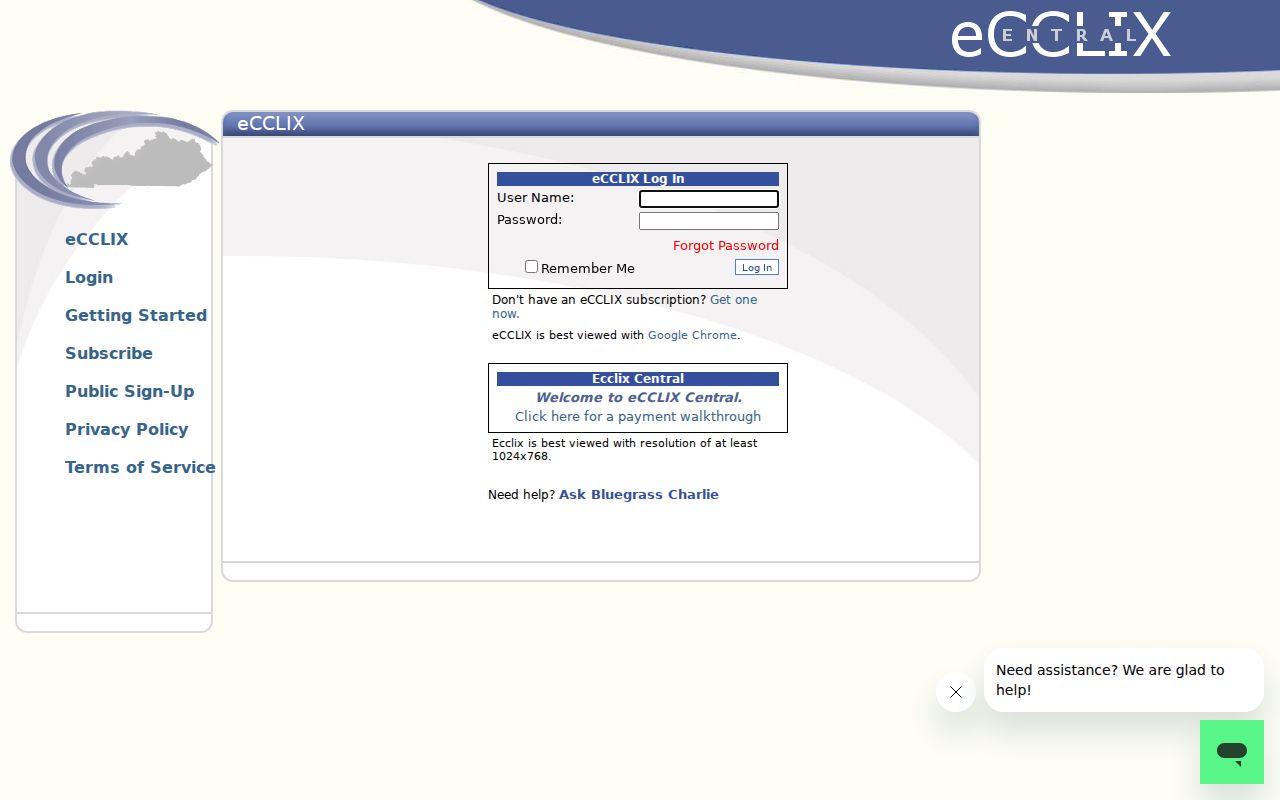
An office visit thus remains part of Knox deed access.
Knox County Property Record Types
No single Knox County property record tells the whole story. A deed names the parties and the legal description in a transfer. The assessment roll ties a parcel to its January 1 owner and value. A mortgage or lien records a claim. A release shows a prior filing discharged. Plats organize lots and blocks. Municipal files add permits, zoning, annexation, and utility records.
| County record | Main fact | Official keeper | Practical access |
|---|---|---|---|
| Deed or easement | Parties, legal description, recorded transfer or right | Knox County Clerk | eCCLIX or free office access |
| Assessment roll | January 1 owner, parcel and fair cash value | Knox County PVA | Office lookup while the listed portal is unavailable |
| Tax bill or delinquency | Collection status and any transferred certificate | Sheriff, then county clerk | Direct office confirmation |
| Plat or map | Lot, block, road, tract, or map reference | County clerk and map custodians | Recorded plat, historic map, state map source |
| Permit or zoning file | Local approval and land-use context | Barbourville or Corbin | City office or published forms |
Deed questions deserve a deeper look. The fuller Knox County deed records page handles those, while assessment and collection questions turn on the PVA's yearly roll and the sheriff or clerk's tax file.
January 1 Shapes Knox Records
Kentucky assesses real property each year as of January 1. Under KRS 132.220, that date controls listing and owner liability for the tax roll. A deed recorded later in the year may therefore name a new grantee while the bill still bears the earlier owner's name. The mismatch can be correct rather than an error.
The PVA values property at fair cash value and physically examines property on a four-year cycle under the state's assessment process. Fair cash value is the PVA's tax standard. It is not automatically the consideration on the newest deed, and neither figure is a private appraisal. Date every value and owner result, then compare its effective date with the deed's execution and recording dates.
The Kentucky assessment process capture summarizes the statewide framework behind the Knox roll.
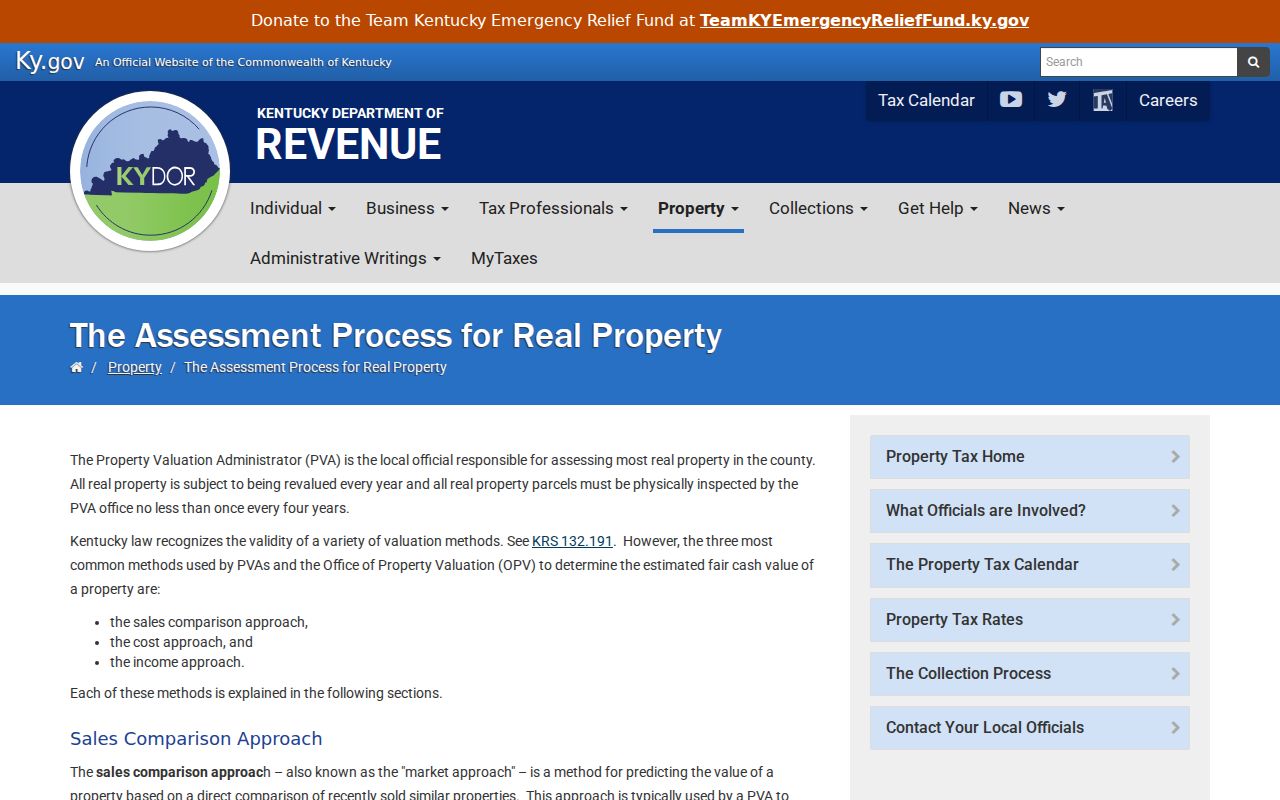
That statewide framework supplies the timing rule for Knox County records. The local online parcel card is not available for inspection.
Knox Parcel Map Fallbacks
Knox County publishes no public parcel viewer, no downloadable parcel layer, and no neighbor-selection tool. That gap is real. A state map feature is not the county tax parcel. Never assume otherwise. Ask the PVA for the exact parcel number. Ask for the property card and any office map on file.
The Kentucky Geography Network and the Kentucky Geological Survey GeoPortal still help with terrain, geology, and statewide context. The Secretary of State publishes city-boundary data. None of those layers settles a private boundary. A recorded plat can tie a lot and block to a deed. Only a licensed survey settles a boundary dispute in the field.
- Parcel
- A tax and mapping unit used to organize land records.
- Plat
- A recorded drawing that lays out lots, blocks, streets, or easements.
- Situs
- The physical location of the property, distinct from an owner's mailing address.
- Legal description
- The deed language identifying the tract, lot, calls, or boundaries conveyed.
Corbin Property County Check
Corbin sets the county's sharpest geography trap. The city sits in three counties. Its incorporated limits cross Knox, Whitley, and Laurel. So a 40701 postal address proves nothing about which county holds the parcel. City utilities can run past municipal lines too. That makes a utility account equally weak as proof of jurisdiction.
Anchor the tract against official county and city boundaries first. Then carry the property search to the PVA and clerk. Choose whichever county actually contains it. Knox County records cover only the Knox side. The Kentucky city filing search and the incorporated-city GIS layer add city-limit context. A deed, tax parcel, or survey answers a different question entirely. That order keeps a valid Corbin address from producing a false dead end. The wrong county stays the wrong county.
County first. Verify the parcel's county before searching an owner name attached to any Corbin address.
Barbourville Maps Bridge Records
Barbourville offers an unusually rich map-to-deed trail. The Knox Historical Museum map gallery holds an 1801 trustee layout. It also holds a 1935 cemetery map, a 1945 Sampson Addition map, a 1967 street and lot-number map, a 1974 zoning map, and a 1995 Barbourville and Boone Heights coal-tract map. A modern street address may never appear in an old deed. Titles like these can revive a search.
Try names as clues. Sampson Addition works, and so do Boone Heights, Ridge Estates, City Cemetery, Fighting Creek, and the Laura Grindstaff Farm. Match the named tract or lot against the legal description. Then follow the book and page references. The coal-tract map carries a warning too. Surface ownership and mineral interests can move through separate deeds, leases, reservations, assignments, and releases. The museum's map collection is the bridge between those historic layouts and Knox County property records.
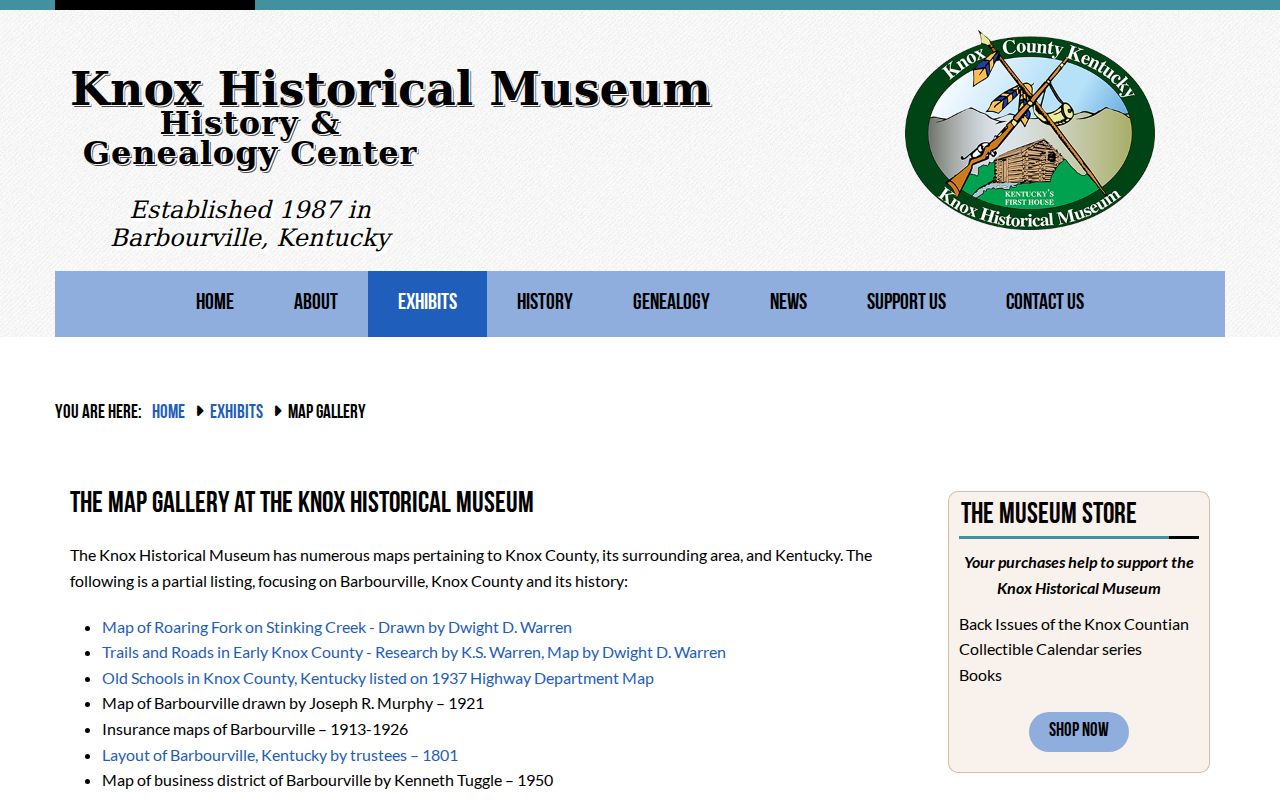
Map titles are leads, not substitutes for the recorded document or a modern survey.
Older Knox Land Record Paths
Knox land records reach far past the online window. The clerk describes records dating to the 1700s. The Kentucky Department for Libraries and Archives supplies an inventory for older deed books, indexes, wills, court books, and related series. It also supplies a research method. The KDLA disaster table lists no Knox disaster year. That blank is not proof that every volume survives.
Work an older chain backward. Start from a known modern deed. Find the grantor's earlier acquiring instrument. Confirm continuity in the legal description. Repeat the process. When the web image ends, request the book at the clerk's office or check KDLA holdings. FamilySearch offers a Kentucky wills and deeds text-search lead. The Knox County Public Library, the local museum, digitized Mountain Advocate issues, and physical newspaper runs can supply notices, address clues, or family context. Archive coverage varies, so note the collection and date you searched.
Liens in Knox Property Records
Ownership and debt are separate questions. The Knox County Clerk records mortgages, assignments, releases, tax liens, mechanics' liens, lis pendens notices, easements, and other instruments. All of these affect a single tract. A filing in the index shows only that an instrument was recorded. It does not prove the claim is still enforceable. Nor does a lien make its holder the owner of record.
Search the owner's name and the legal-description references around the deed. Match an original mortgage to any later assignment and its release. For a business owner, Kentucky Secretary of State UCC records can add a financing-statement cross-check. That helps most where a fixture filing touches real property. A court case may matter as well. CourtNet offers statewide public case information. Its own disclaimer calls the result a snapshot rather than the official record. Pull the case file from the Knox Circuit Clerk when the docket affects a purchase. The same applies for a title question or a foreclosure history.
Note: A certificate of delinquency is a lien and possible sale interest, not an automatic deed to the property.
Request Knox Records Directly
Skip the assumption that everything lives online. The clerk's counter is the free source for public records, indexes, and documents. Use it whenever eCCLIX is gated or an image is missing. A filing sometimes requires an original signature. Those documents must arrive by mail or in person under the clerk's forms page. Inspections run through the office's own Request to Inspect Public Records form.
Kentucky's Open Records Act, KRS 61.870 through 61.884, frames the rest. Under KRS 61.880, the office owes a written determination within five working days. Weekends and legal holidays are excluded. A denial must state its legal basis. The clerk's policy sets a local noncommercial copy price of $0.50 per page. A recording, disc, or tape costs $5, subject to statutory fees. The Attorney General discusses $0.10 copies and actual cost more generally. Follow the custodian's current rule for a Knox request.
Precision pays at the counter. Name the record series, the parties, and the date range. Add book and page if known, plus your preferred format. Ask whether you can inspect the item first. That question alone can trim copy costs. It also confirms the index reference points to the right instrument.
Monitor Knox Deed Filings
Monitoring comes next. After you confirm a deed or mortgage, the Knox DOC ALERT service watches for later filings under a name. Signup asks for the county, a name and confirmation, and an email. It also asks whether the entry belongs to a business or trust. An alert can flag a new filing fast. It cannot prevent a forged document. It cannot cure title or replace a periodic check of the official index.
Enter the name exactly as it appears in the recorded deed. Then add sensible variants for a trust, business, or individual. A Kentucky Secretary of State business-entity search confirms an entity's registered name before you monitor it. Treat every message as a prompt to inspect the actual Knox County record. If a filing looks wrong, contact the clerk. Get legal advice rather than trusting an email summary.
Limits of Knox Property Records
Know what Knox County property records can and cannot prove. They identify the assessed owner. They show recorded transfers and disclose filed liens. They also connect a deed to a plat and document taxable value. They cannot reveal every private agreement or unrecorded claim. Nor do they guarantee that the name on the tax roll holds clear title today. Timing, name variants, estate proceedings, mineral severance, and court filings can each change the full result.
Safe at Home adds a lawful limit of its own. Kentucky's address-confidentiality program may substitute a state address for eligible survivors. It affects disclosure by state and local agencies. A missing or substitute residential address is not evidence of a bad record. Use owner information only for a legitimate property purpose. Send correction requests to the agency holding the source record.
Lawful use. Knox County property records support due diligence, boundary research, tax review, estate work, and civic transparency. They are not a title opinion or survey, and Kentucky law does not permit their use to stalk, harass, or harm a person.